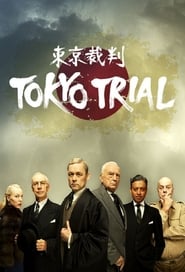
Tokyo Trial
Download English Subtitle
Release info
Tags
English subtitle preview
The first 200 lines.
On February 11th, 1948, at the Tokyo Tribunal for the Far East,
Chief Prosecutor Keenan begins closing arguments.
He states that the responsibility for Japan's militaristic actions
rests not with the people but with their leaders.
On April 16th, the proceedings of the Tokyo war crimes trial
come to a close.
The world now waits while the tribunal judges
consider all of the evidence and arrive at their verdict.
Good morning.
- Justice Röling. - Good morning.
Um...
I would like you to know that I would support...
your position on crime of aggression,
if you would agree to certain considerations.
That's interesting.
The crime of aggression is an ex post facto law,
which is a problem for me.
However, I have decided to be realistic if I want to shape how this trial ends.
If, as you say, we agree to certain considerations.
Correct.
Let me be clear that my reasons
for recognizing crimes of aggression are different than yours.
I have concluded that one can reasonably construe this
as comparable to a political crime in domestic law.
Political criminals are at times detained
when their actions threaten national stability.
And I think that we should argue from this preestablished legal platform.
Thus, we can state that those responsible for starting a war
ought to be subject to punishment
on the grounds that, if they remain free,
they might disturb the international order.
Otherwise, peace and progress may never be achieved.
I'm afraid not, Röling.
We will all be upholding the principle...
established by the precedence of the Nuremberg judgment...
and by the Pact of Paris of 1928...
that wars of aggression are illegal.
Look, we've all come to the same conclusion.
You just came by a different route.
Why obsess about it?
Uh, because, above all else, our profession is meant to...
to interpret laws, which, by their very nature,
can be understood in different ways.
And nothing is more important than the reasons for that interpretation.
We have to keep in mind that differences in the reasons...
may lead to differences in the verdicts and the sentencing.
And that is why we cannot waver from our position.
Then, I'll not accept it your way.
Hello?
Ah, President Webb.
I hope I'm not interrupting anything.
No, not at all.
When can I expect the verdicts to be delivered?
Well, General, we have 49,000 pages of evidence to consider.
We have to get a move on, sir.
- One orange juice, please. - Sir.
- Hello. - Hmm.
- Is this your wife? - Yes.
She's beautiful.
I finally heard from her today, on our wedding anniversary.
- She's safe? - Mmm.
Such a relief.
That's fantastic.
I... I cannot imagine...
the strain of being here with a civil war going on in China.
Thank you.
This is my family.
Wow! So many children.
Yep.
I would like to have one more, but...
I'm not so sure my wife would agree.
Well, we've reached an important, uh, crossroad in our deliberations.
Once those decisions have been made, we can all get back to our lives
and families, however large.
I, um...
I find myself at odds with Patrick's group...
- and about the crime of aggression. - Hmm.
And I was wondering if you were joining their camp.
The vast majority of judges are Western.
I want to be sure that what I decide for Asia is good...
and also seen as fair by the rest of the world. So...
I am joining the majority.
Well...
Come in.
- Sir William. - Lord Patrick.
You asked to see me.
With the evidentiary phase of the trial over,
it's a good idea to exchange opinions on how to move forward.
I'm aware that you and some others have banded together.
But as the president,
I hope we'll be able to collaborate on our findings.
I'm sorry, President Webb,
but circumstances have forced a certain number of us to push ahead.
We have decided to write the final judgment ourselves.
I beg your pardon?
As we have a clear majority, we are entitled to do so.
Good day.
General MacArthur didn't bring me back here just to stand by and watch.
- I'm going to write my own judgment. - Your own?
As the president, I have the right and the responsibility to write a judgment.
One that speaks for all the judges.
I am glad you've agreed to join the majority.
Hmm.
The majority view is reasonable, proportionate and fair.
It honors the victims.
But, um...
I have to say...
I still have some doubts about doing this without Justice Webb.
He is the president of the tribunal.
But on the defense motion to dismiss
on the ground that the crime of aggression did not exist,
President Webb was unable to write a strong report.
Neither could he unite us all.
Don't you agree?
Well, yes.
We appreciate that you want to write the sections pertaining to China.
You are vital in truly bringing some closure to the war with Japan.
Let's hope so.
Are you feeling all right?
Just lately, I have become obsessed
with eating a piece of good Scottish beef with a decent Yorkshire pudding.
I don't seem to have appetite for anything else at all.
Very good.
Accentuate this point here.
Thank you.
I've just heard that Webb is gonna write his own action.
But how can he do that by himself?
It'll run to 500 pages.
Unlike us, he's got his own staff...
Patrick!
Help! Someone!
Get an ambulance.
Patrick.
Patrick!
His lungs and circulation are under a great deal of strain.
But they say he'll make a recovery.
What do we do now?
- Press ahead. - Mmm.
But we're gonna need some help.
Right.
Good morning, everyone.
This is Quentin Quentin-Baxter,
a specialist in drafting legal documents
who I've invited here to help with our cause.
I'm proud to say he's also from New Zealand.
Yes. Well, I think I best get started right away.
Good man.
Why don't you take that spot over there while I get you a cup of coffee?
Okay.
General Zaryanov of Soviet Union.
He wants it clear that he will write the section on Shigemitsu.
This man's fate is very important to us.
Great. He writes the draft, and I'll take a pass at it
so that it fits with the rest of our document.
He will be aggravated by your response.
It implies immediate disrespect to say that you'll alter his words.
I thought you were the interpreter.
I have been present in every meeting of this trial from the beginning.
I know the stakes involved,
and I know how best to prevent an unnecessary incident.
Tell the General I will be happy to receive his section on Shigemitsu.
Röling, how nice of you to come.
How are you?
Phlebitis.
Other complications in the legs.
Nothing that will keep me down for long.
I truly hope you get back up on your feet.
Oh, I'm not so sure you want that too soon.
Röling...
understand...
I once believed the world was full of possibility.
And now?
I saw two world wars destroy Europe.
After the first, international conferences didn't stop the second.
Can you get the pillow?
If we fail again to make a new mark in the sand...
what is the world to believe?
Well, we should focus on interpreting the law correctly
if we want to make, as you say, a new mark in the sand.
Nuremberg has given us a legal precedent
that could lead us from the violence.
We have to defend and uphold that precedent here...
or it'll never gain a permanent foothold.
You make it all sound so simple.
Ah... I admit it's very complicated.
But people who start wars must be held accountable,
and this is the quickest and clearest way to do that.
I wanted to tell you in person...
that I am writing my own dissenting opinion.
I think that you and I have the same objective.
But as a jurist, I cannot compromise on my principles,
even if this means that I'm alone in this.
Now that we are laying our knives upon the table...
I should tell you that I intend to fulfill the charter.
Good.
All the best.
Thank you.
Only missing a time sequence.
Got it here.
Ah, good.
Tokyo Trial subtitles in other languages
More English subtitles for Tokyo Trial
- tokyo trial s01e02 720p WEBRip x264-RARBG · 88 downloads · 2017-02-21
- tokyo trial s01e03 720p WEBRip x264-RARBG · 50 downloads · 2017-02-21
- tokyo trial s01e01 720p WEBRip x264-RARBG · 66 downloads · 2017-02-21
Comments
No comments yet. Be the first to leave one.