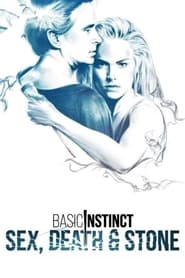
Basic Instinct: Sex, Death & Stone
Download English Subtitle
Release info
Tags
English subtitle preview
The first 193 lines.
I think that there's a certain fear of women
and a certain concept and conceptualization
that women make all things bad,
that women make all things wrong.
That there's, um... a driving force,
that there's an evil quality existing in women.
That is absolutely true.
- - And this is the king of evil.
This is the baddest of all bad.
I wasn't too sure how the people in the United States
were gonna react to the film.
The big event of 1992
was Basic Instinct
and number one movie of 1992 worldwide.
If there is violence, I won't go around it.
If there is sex, I won't go around it.
'You talk to me like that again
and I'm gonna come over this table and hit you.
Paul Verhoeven, he likes trouble.
He's a provocateur.
He loved women.
I like women better than men.
So, I was excited. Uh...
I was excited about the... the opportunity.
Everything was at stake for me.
He was going to have a success or a giant flop.
But I was going to have a career or not.
The fuck of the century, I think we shot for five days.
Everyone thought that I was "like that".
It should be an R-rated movie,
not an NC-17.
The moment that-that you saw this... Huh?
- Out. - Suddenly, I couldn't hear
and...
Then it turned out that the movie was all about Sharon Stone
and that all the publicity later was on Sharon Stone.
This movie is a smash and...
- Sex... - ...death...
- ...and Stone. -
At the time of Basic Instinct,
I just remembered, um...
the world getting very conservative.
Movies, sort of, getting conservative.
And, uh, I wanted to do what I would call a slamdance,
something kind of edgy and raw,
maybe, certainly,
having the echo
of, uh, Fatal Attraction was probably in my mind
as I shared, looking for that interest,
this project Basic Instinct came up
that was written by Joe Eszterhas.
Well, Joe Eszterhas, of course, is, first of all, he is from a European background.
I mean, he came to the United States.
He is from Hungary, and he came to the United States,
I think, when he was 15 or 20 or something like that.
So, he has certainly... partly a European, uh...
say, feeling,
and, uh, that's what attracted me anyhow in the script,
that it was much more progressive, say, sexually
than a normal American script would ever allow.
Um, I was a journalist for some time
and one of my...
responsibilities was, um, covering police stories and the police beat.
And one of those people that I met was a friend of mine.
He liked shootings too much.
He was involved in three or four shootings,
and I didn't think it was coincidental. I think he enjoyed it.
The character always stuck with me.
At a different time in my life, I knew a woman,
a young woman,
who was really manipulative and very good at manipulation.
She was brilliant,
and she used her entire personality or sexuality
as well as her brains.
I can't tell you why.
Many years afterwards, I decided
to put these two people
together in this fictional mix.
That's why she killed herself.
- -
But the whole thing, they took 13 days
to write the entire script,
from beginning to sale.
Why I wanted it, it was, let's say, amoral,
it was, let's say, uh, aggressive, uh,
sexy, and all kinds of things I liked, you know.
I thought it was a great script.
The beauty of the script was, for the studios and for everybody,
you could just shoot it. You didn't have to do anything.
It was there, you could shoot it.
So, everybody wanted to have it.
Everybody in Hollywood bid to buy it, except for Fox.
It turned into the biggest auction for a script that there had ever been.
And we sold it for $4 million
Um, I gave one to the person who was going to produce it, Irwin Winkler,
with whom I'd done a couple other movies.
Ultimately, Irwin didn't produce it. Paul brought in his own producer.
So, the actual amount of money that I got for it was $3 million bucks.
This independent production company, Carolco, uh, had it,
and Paul Verhoeven,
looked like it was a possibility for him to direct.
I was a tremendous fan of Paul Verhoeven's,
from his Dutch pictures,
a movie called Spetters, Soldier of Orange.
Um, he had a wonderful Dutch honesty about sex.
I met him. I was really, um, excited to meet him
because I loved his films.
I thought that all of his Dutch movies were really extraordinary,
and I got the feeling that I was the only actress
that had come in that knew the body of his work.
And I think that we just hit it off on a kind of...
I don't know, artistic and intellectual level.
He likes trouble.
Paul Verhoeven, he likes trouble.
I wanted to do a picture that was, as I said, a slamdance.
And I think, right at the beginning,
we both, uh, were looking for that kind of picture that would be
a little on the edge, a little dangerous.
I was excited. Uh, I was excited about the opportunity.
We had a meeting at, um, Winkler's house
about the screenplay.
This was several months after the sale because it took some time
to sign Paul and Michael.
We ran into trouble with the writer, Joe Eszterhas.
Joe Eszterhas did not want to rewrite anything.
He thought it was really in good shape.
The meeting just blew up.
We started talking about some rewriting.
He, um, was a little reluctant.
Michael felt that there was no redemption in the script,
that she
wins at every moment.
And he wanted an ending where
he essentially wins over this evil character.
I said, "We can't do that because we'll turn it into
a television movie and something that we've seen over and over again
and the fact that it ends the way it does,
with an ambiguity at the end of it, makes it interesting to people."
There were also elements that I tried to change.
Eszterhas was very angry about that later.
Paul took Michael's side
and said, uh, "I am the director, ja,
"and you are the writer, and you will do what I say you will do."
And I jumped up and I said, "You talk to me like that again
"and I'm gonna come over this table and hit you."
- ...Catherine Tramell. -
Michael and Paul left.
Irwin was very upset,
and as Paul was leaving, he got to the door,
he said, "You know, you're a fucking Nazi. That's what you are."
It was totally crazy.
Ultimately, I realized that everything that Joe had written
was better than everything new that we had added or changed, you know.
We just shot the script as written.
So, we did and, uh, and we decided to be, um, together and allies for a while.
A big movie was just a question, really, of trying to find
the actress to play, uh, Sharon Stone's part,
Catherine Tramell.
I became aware of the project
and I wanted to do it, but I could not get the script.
Eventually, my manager, Chuck Binder,
used a credit card, went into the office,
and stole a script for me.
And then called Verhoeven every single day
for months, maybe eight months.
It was quite a journey.
I was aware of the fact that we couldn't find
a female lead for the movie
that everybody liked.
He knew Sharon from Total Recall.
Hello.
When I was preparing Total Recall,
they came to me and said,
"This is the script, and this is Arnold Schwarzenegger."
And then she came in.
Sorry, Quaid.
Your whole life is just a dream.
The first day of the casting,
the first actress that came in, done.
She's so sweet and then, just in a split second,
- is a really mean vicious bitch. -
Honey,
you wouldn't hurt me,
would you, sweetheart?
Sweetheart.
Be reasonable.
After all,
we're married.
She had range.
The way she acted in Total Recall
was for me the reason
to ask her to do Basic Instinct.
I remember the casting process
Basic Instinct: Sex, Death & Stone subtitles in other languages
Comments
No comments yet. Be the first to leave one.