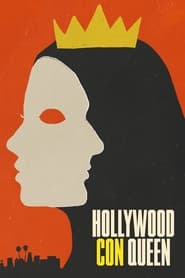
Hollywood Con Queen
Download English Subtitle
Release info
Tags
Download English Subtitle Files for Mobile (3)
English subtitle preview
The first 200 lines.
So it's gonna be, um...
maybe like an hour and a half, two hour drive?
- Yeah. - And you have his name and everything?
Yeah.
Have you seen this person, ma'am?
- Does he look familiar to you? - No.
Does he look familiar to you?
No.
Excuse me, sir.
Do you have his address?
Mangga?
Mangga, Block B2, Number 10.
Excuse me, ma'am, I wanna ask...
do you know where Mangga Street, Block B2, Number 10 is?
Here is B2, Number 10.
Do you know how we should contact him?
Mr. Gandhi. He likes to visit him.
- Can you take us there? - Sure.
Okay, so we'll follow you.
Yeah.
We're... we're journalists...
and, uh, we wanted to speak with you.
How did you find me?
It's a story that sounds like a Hollywood movie.
Creative professionals in the entertainment industry.
They had been lured to Indonesia
on the promise of work from major Hollywood figures.
Once there, they are tricked out of thousands of dollars.
The promised work never materializes.
At the center of this deception is a mysterious figure
known as "the Con Queen of Hollywood."
Scott Johnson of The Hollywood Reporter first reported on the scheme.
This is somebody who is exceptionally skilled at voice work.
There was this desire to enter into relationships with the victims.
And sometimes it got sexual.
So, what would drive somebody
to create these really elaborate fantasies
for other people to fall into?
Because it wasn't really about the money.
It was about something else.
People said they were convinced that it was two people
or this woman
and that the Con Queen
had a long criminal record as an impersonator.
I later started to realize just how big this actually was.
There were hundreds of victims from all around the world,
which meant there was a clear financial toll.
But I think the more lasting damage was psychological and emotional.
My beat at The Hollywood Reporter was to cover crime
and the seedy underbelly of Hollywood.
We got a tip that a grift was underway.
All these working professionals,
many of whom had ties to the entertainment industry,
had been contacted by these prominent Hollywood executives
for work on these high profile projects.
But the projects didn't exist,
and the executives' identities had been stolen.
The whole thing was a lie.
These women are incredibly powerful and influential,
so placing them at the center of the scam gave it credibility and legitimacy.
And there was a huge range of victims.
There were actors, photographers, filmmakers,
screenwriters, make-up artists,
literally hundreds and hundreds of victims.
It was a truly global crime spree.
And the victims were vulnerable because they were freelancers.
People who went from job to job, looking for new opportunities.
You know, they're gonna put a photo on Instagram.
They're gonna put their work on their website, or IMDb.
All of this information is there for anybody.
So the scammer used that to great effect.
But I think the more impressive feat was the impersonator's ability
to craft these manipulative and deceitful fantasies,
whose sole purpose was psychological devastation.
And it's what got me really interested in the story
because I realized that the story was not what I thought it was.
The money wasn't the primary motivation.
The primary motivation is this desire
to get inside the minds and the dreams of people,
and to pervert them.
To twist them, and to destroy them.
Doug Liman reached out to me on August 30th, 2020.
When I saw the email, I don't think I had heard of Doug Liman before
but I Googled him and realized Doug was a huge director
who had done some of my favorite movies.
Swingers and American Made.
And he said he had a movie coming up
that was gonna be filmed in outer space with Tom Cruise.
And one of the producers that I'd worked with
had recommended me and said I was a good actor.
Because they were looking for sort of an undiscovered talent for a role.
Doug said, "I'd love to get you on the phone
with the chairman of Universal, Donna Langley."
When Donna called me, she said, "This is gonna involve a table read
and I'm gonna be there, and Tom Cruise himself is gonna be there as well.
You're kind of a nobody but I think you can get there,
and this is gonna be your big shot."
And I thought the whole thing was surreal and exciting and weird.
Henry and I got an email from Wendi Murdoch to work on a project.
And I was familiar with the name, Wendi Murdoch.
That she was an ex-wife to Rupert Murdoch.
She was involved in the art world.
She had spoken to
the head person of Condé Nast, and they had recommended us.
And we had just finished working with them on a project.
This is how the industry works.
Like, people give you recommendations and sometimes that's how you get your break.
So we scheduled a call with the assistant,
we get in touch with him first, then Wendi picks up, she said
the work would end up being displayed during the Winter Olympics.
She needed some photographers to help her document
the spread of Chinese communities outside of China,
specifically, in Southeast Asia.
And as photographers, we travel all over the world.
So the puzzle pieces kind of fit together.
In 2017, I got an email from Amy Pascal.
And I remember thinking to myself, "That name sounds familiar."
"Hello Will, I have your details from Joe Kudla at Vuori Clothing
and was intrigued by some of your work that he showed me a while back."
And at that point, I did look up the name,
saw who it was, and I'm here wondering
why I'm getting an email from this Hollywood producer.
Amy, one more time!
But I've worked as a freelance photographer and filmmaker
for the majority of my professional career.
Sometimes I would have a job come out of nowhere.
And then I get a phone call from her,
and she starts explaining the concept
for this TV show that she wants to pitch to Netflix,
based off a children's storybook called Sidewalk Flowers.
It's basically this little girl in this mundane, black and white city,
and she finds these little flowers in the cracks of the sidewalk,
and that brings color to the world.
She wants to create a show about traveling through the world,
finding these little instances,
kind of in the cracks of culture that are meaningful
and have this beautiful weight to them.
She said she wanted to send me on a week-long trial trip
to Indonesia to find these storylines that will accumulate
into me presenting essentially a storyboard
for the pilot of this TV show.
I remember after that phone call, I definitely had thoughts of, "Why me?"
But also, "You have to take risks."
And this was such an incredible opportunity
for where I was at that point in my life.
I spoke to a couple of the producers in Hollywood
who were sort of baffled about why their names
were being used in connection with these fictitious projects.
And we found out that one of the producers who'd been impersonated,
Amy Pascal, had hired a detective agency called K-2 Intelligence.
As private investigators, we do investigations
tailored to high-net-worth individuals.
And I got a call from a lawyer who said,
"One of our clients is being impersonated.
Someone's calling around town
and having really strange conversations with people.
Not really sure what it's about. Can you look into it?"
And it became this thing where people in Hollywood
would talk to each other.
We learned about other people that were being impersonated.
And within Hollywood, it probably was 50 different individuals
who found themselves impersonated along the way.
My first impression was that this was potentially a prank.
There wasn't an obvious financial component initially,
so it was really hard to understand what we were dealing with
and what the motivations were.
I think that's, in a way, what makes it such a good scam.
Is that the scamminess of it isn't immediately evident,
because you just don't think anybody
who would go to this much effort
could possibly be scamming you.
And I think that the key is that once the impersonator
succeeded in selling the story,
it was almost like the hooks were in,
and the victim became, like a toy, a plaything for the scammer.
I was by far the least well-known person in contention,
which is why Doug needed to spend so much time grooming me.
And that's when he started laying out in more detail what the plan was.
He sent me a schedule, and then he said,
"You'll be doing physical therapy on these days, and martial arts,
and we're gonna take care of all that except for the martial arts.
And I've got these experts in the Philippines.
They're gonna make some videos for you and I want you to pay them.
These guys are the number one guys in the world for this."
I hadn't heard of this type of martial arts.
So I researched it.
That first payment was only 800 dollars or so,
which didn't seem like a huge deal.
I'd been paying money for acting classes on my own,
and paying a few thousand dollars to get martial arts training
seemed like something I was happy to do, even if I didn't get the role.
Doug sent me an invoice that looked legitimate.
I went over to Western Union, went ahead and sent money.
And then they had some celebrity trainer in New York,
and I got an email from them.
Had a questionnaire with, like, 50 questions on it.
Kind of related to, like, physical fitness.
And then a lot of questions that were just really bizarre.
But the bizarreness of the questions almost made it more realistic.
"Oh, this is what celebrities do."
Hollywood Con Queen subtitles in other languages
More English subtitles for Hollywood Con Queen
- Hollywood Con Queen S01 ATVP WEB-DL DDP5 1 Atmos H 264-FLUX · 46 downloads · 2024-06-28
Comments
No comments yet. Be the first to leave one.