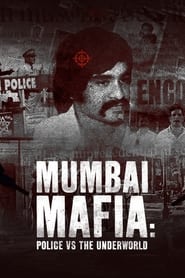
Mumbai Mafia: Police vs the Underworld
Download English Subtitle
Release info
Tags
English subtitle preview
The first 188 lines.
There has always been crime in Mumbai.
It's ever present.
In the 1990s,
the underworld was fighting for control over Mumbai...
and they were very violent.
A couple came to the police station.
They said, "Sir, we were tied up in our home at night
and two gangsters held us at gunpoint, emptied our house and left."
These two gangsters had many cases filed against them by the police,
from murder to rape, house robbery, everything.
They were contract killers.
One day, out of the blue, we get a call.
These guys are at a house evicting people...
forcibly.
As soon as we got there,
one of them fires at us.
The other one took out his weapon...
and attacked a constable.
I shot both of them, three bullets each.
They were declared dead.
That was my first encounter.
Police shot three gangsters in the business district.
The Bombay police have shot dead
more than 40 gangsters in the last two months.
Encounter policemen, heroes and saviors.
- -
The press called me "Fastest gun in the West."
Who chases after whom?
Pradeep Sharma. 104 encounters.
- No, sir! - Stand up!
We have to clean them from our society.
Encounter specialists,
heroes with Bollywood films centered around them.
People say you are bigger superstars
than the film stars who play you.
- Dirty Harrys of Mumbai... - Criminals in uniform.
Mumbai Police's Pradeep Sharma
charged with kidnapping and killing in cold blood.
After killing 112 people, this is the reward I get.
I wasn't from Mumbai.
When I looked around, I found everything odd.
Life in Mumbai is fast.
The biggest difficulty for an outsider in Mumbai
is that you sweat a lot here.
There is humidity
and, of course, crime.
When I first joined the police...
MAHARASHTRA POLICE
...my father, he was not happy.
He'd say, "Live a good life. Become a professor or a scientist."
But then,
I wouldn't have had such an adventurous life.
I didn't know anyone in Mumbai.
I had no friends or relatives in Mumbai.
MAHIM POLICE THANE, MUMBAI
That's why I stayed in the police station for 24 hours.
I lived in the police bachelors' quarter.
A police officer like me has so much violence in his life.
It's a painful job.
But if you have accepted it, then you have to do it.
- -
Films based in Bombay always had gangsters
and, you know, the bad guys
because we are the organized crime capital of the country.
For the criminal, this city is absolutely perfect.
Nobody is inquiring.
Nobody wants to know where you're coming from,
where you're going.
Nobody is fingering you in this city. They let you be.
Organized crime really exploded in the '80s and especially in the '90s.
That's when the rules changed,
when common people were fucking killed across the city.
This is an organized crime case. It's a serious incident.
He's been shot. I heard it from his son.
The state government has been criticized
for not doing enough to control hits by the underworld.
The gangsters were doing anything they wanted.
They were getting away with it.
It was fear.
Real fear.
They had become so strong that they were more powerful than the cops.
There were a lot of criminals.
Murders happened openly.
No one was safe.
We could not do anything, we were powerless.
Even if someone committed murder and went to jail,
they would get bail and be out in three months.
I didn't like it, but what could I do?
A police officer shooting someone with a revolver
was out of the question.
The underworld was getting out of control.
Police were running around like headless chickens.
So, that's when I decided I'm going to get them.
When I started studying the activities of the gangs,
my main focus was on Dawood Ibrahim.
He was a major don.
Dawood had a gang called D-Company.
We had very few sources of knowing what Dawood is doing.
So we started cultivating informants.
One of my informants rang us up
and said two of Dawood's gangsters were holding a businessman hostage,
and they were armed.
We came and apprehended them, and then we started interrogation.
In interrogation, they gave us a tremendous amount of information
about the activities of Dawood's gang.
This organization was operating on a massive scale.
D-Company is like a huge conglomerate.
I would say, at any given time,
D-Company would add on its payroll more than 25,000 people.
It's a big industry.
It's got its hands in almost every pie, from smuggling gold,
silver, electronics, drugs, bootlegging, gambling.
Dawood was very powerful.
He was like a king, and I wanted to make it big in Bombay.
That was why I joined hands with the company.
Dawood would call himself a businessman.
But he got to the top mainly because he eliminated all opposition to him.
He would order a killing.
He would want it done with ten, 20 bullets being shot there,
and then people would get scared of him.
That fear factor is what he used to thrive on.
Power flows from the nozzle of a gun, you can say.
Their big thing was extortion.
Every week, the D-Company would take money from shopkeepers in the area.
Everybody had to pay weekly rental
so that business happens smoothly and nobody comes and busts up your shop.
Anybody who's making money,
whether you're a doctor or a film star or a builder,
you had to pay money to them in order to survive and to stay alive.
They were the unofficial mafia and you had to pay.
You didn't, next week, boom. You're off, killed.
Dawood and his men were ruthless.
They were extremely dangerous.
So much of drug smuggling in India was the D-Company.
Gold smuggling and prostitution,
organized racket, cricket match corruption, even Bollywood.
In the '90s, it was estimated 500 crores from the underworld
was going into movies being produced.
I mean, this is insane and true.
D-Company not only had their fingers in various pies,
they owned the fucking pie shop.
Now there is all this ruckus about Dawood.
I have known him since 1974 when he committed his first robbery.
I used to meet him daily.
I was close friends with his younger brother, Anees.
They weren't born with a silver spoon in their mouth.
They came from struggle.
In the beginning, they didn't have cars, they traveled in taxis.
One day, he gets a tip about a rival at National Bar.
He had come there to drink beer.
They chopped off his fingers and nerves.
Dawood's name in the area was "Terror."
He was known as "Terror."
If a person is murdered in Bombay, people look at the body and walk away.
Because if they go closer, they'll be trapped.
Dawood's gangsters terrorized people.
People would not come to the police, and it was going on unchecked.
I decided that I have got to get these fellows,
come what may.
At that time, I had about 32 police stations with me.
I picked out officers based on their reputation.
I wanted officers who were physically fit,
who I felt had the guts enough to fight fire with fire.
If you shoot a criminal,
you're laying yourself open to criminal charges.
You are laying yourself open to retaliation by the gang members.
So no one wanted to take the risk.
But I felt that going after Dawood's gangsters
would prove that the police are capable of taking action
and instilled a kind of fear in the underworld.
One of the gangsters that I was looking for was Dilip Buwa.
He was by far the most fearless of Dawood's gang members.
In Mumbai earlier,
Dilip Buwa shot and killed a policeman.
And he had literally kicked that dead body aside.
So we started searching.
And one of my informants came forward and he was very secretive.
He'd talk only to me.
There used to be the Sea Rock Hotel at that time.
We parked in the carpark and he quietly came and sat on the backseat.
He informed me that Dilip Buwa had ganged up with Maya Dolas,
a gangster who had escaped from police custody
and they started extortion on a massive scale.
Maya Dolas and Dilip Buwa, who are notorious gangsters,
who, between them, must have committed more than 40 to 45 murders.
My informant said, "I know where these fellows are."
"At present, they are eating and drinking in Lokhandwala,
and they were armed."
Mumbai Mafia: Police vs the Underworld subtitles in other languages
More English subtitles for Mumbai Mafia: Police vs the Underworld
- Mumbai Mafia Police Vs The Underworld 2023 720p WEBRip x264 AAC · 38 downloads · 2023-02-04
- Mumbai Mafia Police Vs The Underworld 2023 WEBRip x264-ION10-RBB · 37 downloads · 2023-01-08
- Mumbai Mafia Police Vs The Underworld 2023 WEBRip x264-ION10-RBB · 42 downloads · 2023-01-08
Comments
No comments yet. Be the first to leave one.