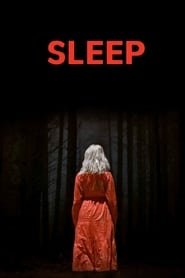
Sleep (Schlaf)
Download English Subtitle
Release info
Tags
English subtitle preview
The first 200 lines.
Hello, I'm novelist and critic Kim Newman, and I'm here with...
Author and filmmaker Sean hogan.
And what are we here to talk about?
We're here to talk about sleep, the new German horror film.
I mean, I suppose it is a horror film, but it's a number of other things as well.
Yeah, I think it's...
I mean, and I should footnote a bit
that it's rather unusual for us to be doing a commentary on a new film.
It's also a new film by a first-time feature filmmaker/director.
So we can't fall back on,
"and here's what they did in their earlier work,"
and make connections with the auteur vision.
It's a film in and of itself.
I think it does relate to some other films in interesting ways we can talk about,
but we're working a bit in a vacuum
compared to our usual commentary.
We've got lots of cultural detail to draw on.
So, in a way, we're on a journey with the listener.
Yes!
We're not positioning ourselves, I should say, as experts
in any way on this particular film or...
No, but it's an interesting film that warrants discussion
and so, hopefully, we can manage that.
I hope that we can elucidate a bit.
And it seems to be a film that's not had a great deal of exposure
in this country previously.
No. I...
I had heard of it, but I had not seen it before.
It came up as a possibility we should do this.
You generally see, obviously, more of the new releases than I do
so I wondered whether you had seen it previously.
It had not quite crossed my radar.
I mean...
But then again,
don't you love it when you get a film you've never heard of?
It does all kinds of weird, surprising things.
And the next Michael Venus film I'm now really looking foward to.
I hope he doesn't take as long about it
because, ahhough he's a first-time filmmaker,
he's not a young filmmaker.
He's in his mid-40s.
He's directed a couple of short films before.
And this is a very assured film formally. It's a very controlled film.
It's also a grown-up film, I have to say, which...
I don't think that's a particularly risky strategy
in, as it were, continental horror,
but it's not what American horror has tended to be,
aimed at teenagers.
I think that the European tradition...
And this film is steeped in the brothers grimm
and all kinds of... And e.T.A. Hoffmann
and other German gothic images, as always.
Even though the brothers grimm, in theory, wrote for children.
Yeah!
Yeah, it's interesting, in fact, that there's almost a bit of a feint
in the opening.
We assume that the mother, played by Sandra hiiller,
who is the most familiar actor from her part in Toni erdmann,
which was an international hit,
is going to be the lead character, but no, she goes to sleep!
And it's the daughter, the younger woman,
who receives the sins of several generations passed down,
which, again, is a particularly German theme.
The director has talked about this
as being his dark version of a heimat movie.
Do you want to explain a bit what a heimat movie actually is?
So, I'm certainly not an expert on heimat movies,
but, as I understand them, they were a genre
that was very popular in the '50s
and presented kind of idyllic visions of small German towns
and were very romanticized pictures of the German rural life.
And it was something
that traditionally newer generations of filmmakers have reacted against.
In new German cinema there are several anti-heimat films.
In fact, the famous TV mini-series heimat by Edgar reitz,
which is actually one of those astonishingly influential works,
invented binge-watching in the early 1980s.
Before there was a medium that was suited to heimat,
heimat was disguised as a TV series in Germany
and a film in britain.
And it had... there were several follow-ups to that.
And I think that that meant that outside Germany
we got a sense of what heimat film was.
And Michael haneke has had a go at heimat film as well.
The white ribbon is very much an anti-heimat film.
But I think what's interesting about this is...
A lot of those films tend to be quite dour
in their rejection of that image of Germany
whereas this is quite funny in a creepy sort of way.
We'll obviously get to that point later in the film, but...
It exposes the rot in the rural village,
but then proceeds to poke fun at it.
Yeah, it's...
In some ways it reminded me of the British movie hot fuzz
by Edgar Wright,
which is much more parodic than this is
but also has the idea that what you need to be terrified of
is what ray Davies called
"the village green preservation society".
- Those are your actual monsters. - Yes!
We do get that in this.
There's a creepiness to small-town life.
I suppose Stephen King is kind of a heimat writer in america
in the way that he reacts to Thornton Wilder's our town
or grace metalious' Peyton place,
with Salem's lot or it,
which explicitly relate to the earlier works.
I think this does explicitly relate to a great German tradition,
something that I suspect is common on German television.
It's... there's a sort of soap-opera feel to it,
although we're in a particular slice of...
It's actually former east Germany here, isn't it?
So it's got several layers of totalitarianism to kick against.
Jessica hausner made a film called hotel a few years back
that actually had a slightly similar feel to this.
That's also about a hotel at the very edge of the deep, dark teutonic woods.
That's a very German theme, isn't it?
Possibly even more enigmatic than this is,
which does at least clear up most of its mysteries in the end.
You have a mystery that is solved.
And this stretch of it is almost Italian giallo
in terms of its setup, isn't it?
It's dreams rather than something glimpsed or a clue,
but it's still...
Those children's pictures, the sketchy visions,
and the thing that happened that nobody has quite understood
and that our outsider protagonist realizes
is intimately involved with their own origin.
Yes.
Actually, also underlying the structure of all this
is h.P. Lovecraft's the shadow over innsmouth,
where the outsider realizes he's not an outsider.
Not an outsider. Yes, yeah.
That this is where he comes from.
And also, as you were saying,
in the way it seems to position her as a protagonist,
it's almost a little bit of psycho
in that she goes to this strange hotel and she doesn't die,
but she's basically sidelined for most of the rest of the movie.
Which, I mean, the first time I saw it I found very disorienting,
because I had assumed that the younger girl,
who was not an actress I was familiar with,
I assumed she was going to be a secondary part
rather than, as it turns out, the character that we spend all our time with.
And this moment, I think, signals towards another big influence on this,
which would be lynch, and specifically twin peaks.
Which also includes a motel at the very edge of the deep, dark woods.
But no, yeah...
Hogs are the big...
The monster animal or the totemic animal, the absurd animal here.
Yes.
Which, again, given that Germany is famous for its sausages...
Strikes me as being a knowing...
There's also a lot of quite grotesque sausage-eating in this film later on.
Yeah.
I don't... do Germans know that sausage-eater is a demeaning term?
I think it goes back to the first world war, but it's...
But it does seem to crop up here. It's almost like... yeah.
But in terms of what you were saying about this being a grown-up horror movie,
I suppose it makes sense lynch being such an overt influence on it
in the sense that, you know, both you and I share the opinion
that lynch is probably one of the foremost horror directors
of the last 30 years or so,
but he's not often categorized as such.
He's certainly, I would say, the most influential on horror.
And another...
It's not even a director, but there is a single film
from...
From 2015
that, I think, has turned out to be
an all-pervasive influence on subsequent horror
and Michael Venus cites it.
It's Rodney ascher's documentary the nightmare about sleep paralysis
and the vision
that so many sleepers or half-sleepers claim to have seen.
It's the inspiration of a nightmare on elm street.
It's the man with the hat in the room.
But that particular film, which examines that phenomenon all around the world
by interviewing a lot of sufferers, or people who have had this experience,
this common...
It's not even a paranormal experience,
but it's something that seems to pervade all culture...
A sort of shared unconscious.
And people have talked about it in jungian terms
and come up with all kinds of other rationalizations for it.
But that particular film seemed to have crystallized so much material
that immediately there have been, like, a dozen creepypasta-type movies.
Slender man, the bye bye man, all these movies that tap into that.
And this doesn't go quite as full-on into that theme
as some of the other movies that played with it as an idea,
but it certainly seems to be floating around in the background.
I mean, sleep is a strange title for a horror film.
It's an Andy warhol title, isn't it?
Not that anybody has ever actually watched that film.
It's one of those, as with a lot of those Andy warhol films,
it's essentially a joke, wallpaper that moves if you look at it,
not a narrative feature you're supposed to sit there and absorb.
But... yeah.
Here we're back with giallo stuff.
Yes, now established as our lead protagonist.
Sleep subtitles in other languages
More English subtitles for Sleep
- Sleep 2020 GERMAN BRRip x264-VXT · 40 downloads · 2022-04-25
- Sleep 2020 GERMAN BRRip X264-VXT · 38 downloads · 2022-04-24
Comments
No comments yet. Be the first to leave one.