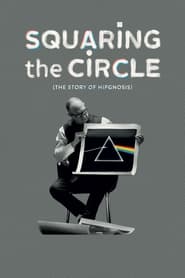
Squaring the Circle (The Story of Hipgnosis)
Download English Subtitle
Release info
Tags
English subtitle preview
The first 200 lines.
Hipgnosis is what it says.
Hip, cool and groovy. Gnostic, meaning wise.
What I love about vinyl is the artwork.
Great photography,
and graphic design, and great imagination.
Incredible songs. Incredible albums.
But synonymous with so many of those records
is the artwork of Hipgnosis.
It was the people who the work was for.
The megastars of the late '60s, early '70s, Hipgnosis,
they were, in a way, a kind of a lens of fascinating excess.
I'd been kicked out of school
and both my mother and father lived abroad.
So I found myself footloose in Cambridge
and I went to live in a house in Clarendon Street.
And I kept seeing these very cool-looking people
going in and out of this one house.
And I thought, "Now they're people I should get to know."
I went across the street,
went upstairs and went into this extraordinary room.
I'd never seen anything like it.
It was Bohemian, to say the least.
It was full of graffiti.
You know, Nietzsche, "God is dead".
A pair of army boots drawn by Syd Barrett.
I didn't even know who Syd Barrett was then.
Everybody was smoking dope,
sitting around, listening to music.
John Coltrane, something like that.
And I was introduced to this guy with long hair
who was very brash.
"Hello, man." That was Storm.
Storm was, like, the leader of this pack
of very nice boys and girls.
Um, but Storm just wouldn't stop talking.
He had been freely educated,
and so he was very loud and very free.
He was also very bright. Very chirpy.
And he played rugby very well.
We played in the same rugby 15.
After the pub, we used to go back to Storm's mother's house.
We used to pile in, about eight or nine or ten of us.
Sometimes drunk, sometimes not.
Storm's mother, Vanji, was very liberal
and didn't seem to mind what we all got up to.
So, Pink Floyd were there,
but they weren't called Pink Floyd.
And, well, we were all there getting a bit drunk,
I don't know, or very stoned.
So, I sat around, and we smoked some joints.
And the conversation was full of laughter.
I felt at home there somehow.
I was kind of a loner, bit lost, in a way. I was only 16.
Anyway, couple of hours in...
...big bang at the front door, and it's the police.
Everybody ran out of the room,
shovelling pills, grass, hash in their pockets.
Out the back door.
I stayed put.
Anyway, the police got in the house and found nothing.
And we got a scolding.
And Storm sat there and he said to me,
"Why didn't you leave with the others?"
And I said, "I don't believe in dumping a sinking ship."
"I believe in fighting it out till the end."
And from that moment on,
we were in each other's company, and never left.
And became like brothers.
Storm and Po worked for the greatest artists in the world.
Whether that was Pink Floyd, whether it was Led Zeppelin
whether it was Paul McCartney.
People that could have worked
with whomever they wanted to work with.
And Storm was a really difficult guy.
I'm described by some as difficult to work with,
by others as a ponce, by some as a narcissist
with an ego the size a small planet,
by some as really awkward, argumentative,
by others yet as grumpy.
Very few as handsome and sexy, which is the way I see myself.
Somehow there was a bonding between us.
And because he was bright and so intellectually sharp,
I immediately gravitated to that.
I thought this man...
I can learn something from this man.
None of us were aware at the time
that Pink Floyd would come out of it,
or so much creative talent
would suddenly arrive from that scene.
But there was definitely the undercurrent
that we were part of the hipsters.
Pink Floyd were getting a lot of attention.
And suddenly everyone was moving to London.
Storm would go into the Royal College of Art.
And I thought, "Oh no, I'm gonna be left behind."
And he said, "Well, just come with me
in the autumn term and enrol,
like you're one of the students in the photographic school."
I said, "I don't know anything about photography."
He said, "Well, come on. I'll teach you."
I said, "Well, what do I do?"
He said, "You point, shoot, reload and repeat."
"Point, shoot, reload and repeat."
And Storm was aggressive like that. I thought, "OK."
Went down to the darkroom.
And I stood next to him and watched the picture
I'd taken some half an hour earlier
come through on this white piece of paper
of this beautiful photograph of a car.
And I got goosebumps all over me.
I absolutely went, "Oh, my God, this is alchemy."
And I knew instantly that's what I had to do.
I need to be a photographer. I wanna be a photographer.
I don't care what it takes, that's what I have to do.
This is magic.
So, for six months, I attended the Royal College as a student.
So already we're starting to see the ducking and diving
that was to characterise Storm and Po's
very successful artistic business relationship.
OK, Po. How did Hipgnosis first get involved
in sleeve design?
Er, through the back door, really. Um...
We knew the Pink Floyd in Cambridge. Um...
And when we came to London,
Floyd were starting to do some things then.
Well, they were starting, flat, and they came along,
and I suppose because we'd been friends,
it was sort of the natural thing to say, "You're in visuals,
why don't you have a go at the album sleeve?"
And that was the first thing we did.
Storm asked me. He said... We're old friends,
even then, when I was 22 and he was 24,
if I could persuade the others to let them do the album cover.
And they were young, and I guess you'd say vital.
And that's what I thought we needed.
Something a bit more unusual and wilder, I guess.
We wanted to create an image
for Pink Floyd at that time
that was based on what they called space rock.
We tried to simulate on the picture
a kind of swirling cosmos of images
that were supposed to represent
a kind of kaleidoscopic feeling of a simulated drug experience.
Storm had the idea. He said,
"Let's take a picture out of this alchemical book,
let's take a picture out of a Marvel comic of Doctor Strange."
"Let's do this, let's do that. OK."
I got the Pentax,
and I shot these things all in black and white.
Processed the film in the darkroom,
and started to create, through the enlarger
by shielding off different parts of the paper,
and then changing the negative
and then doing it again, and then this montage of pictures.
There were dozens of different versions.
But then there was one that just zinged out.
So then I knew how to hand tint and hand colour.
But there was pressure from the record company
to actually have a picture of the band somewhere.
We then went to Hampstead Pond,
where we photographed the band in infrared film.
And we placed a little picture of the band
in infrared in there from that session.
And that was the very, very first album cover,
really, that we did.
There was some genius in there,
but there were times when they weren't that professional.
But they were learning as they went along,
and they had to work everything out from the beginning.
It was such a simplistic artwork, but it worked for them.
And it started Storm's and my career.
They represent the golden age of the music business
where people believed that music was art
and it could change the world.
Whereas now, music is a commodity
and it changes the share price
of whatever company it's attached to.
Whereas back in the '60s, rock stars were artists
and graphic designers were artists.
All that work has stood the test of time.
The name "Hipgnosis" came from Syd Barrett.
He was living in our flat at the time,
and one day, Storm and I came up in the elevator.
And we had this beautiful white painted door,
and somebody had written in biro "hipgnosis".
Exactly the same spelling.
"Oh, somebody's written... We gotta paint the door now."
Walked in, and there's Syd.
And Storm said, "Did you write that?"
And Syd shuffled and looked very sheepish, and sort of nodded
and sort of walked away as he normally did at that time.
It wasn't Syd, who did all sorts
of extraordinary, wonderful things.
Dave Henderson came up with the idea of Hipgnosis.
A friend called Adrian Haggard, he wrote on the wall
the word "hipgnosis" with a "G" in it.
And if anyone says anything else,
it was Adrian Haggard that came up with the name.
We admired this pun on gnostic knowledge
and being hip,
Squaring the Circle (The Story of Hipgnosis) subtitles in other languages
Comments
No comments yet. Be the first to leave one.